How orthopaedic oncologists and their multidisciplinary teams manage musculoskeletal tumours
Treating bone and soft-tissue tumours has evolved from radical sacrifice to limb preservation — driven by advances in chemotherapy, imaging, surgical reconstruction and personalised medicine.
Historical evolution
- Early 20th century
Amputation was the sole treatment for malignant bone tumours.
- 1970s–80s
Multiagent chemotherapy for osteosarcoma and Ewing sarcoma transformed survival.
- 1990s
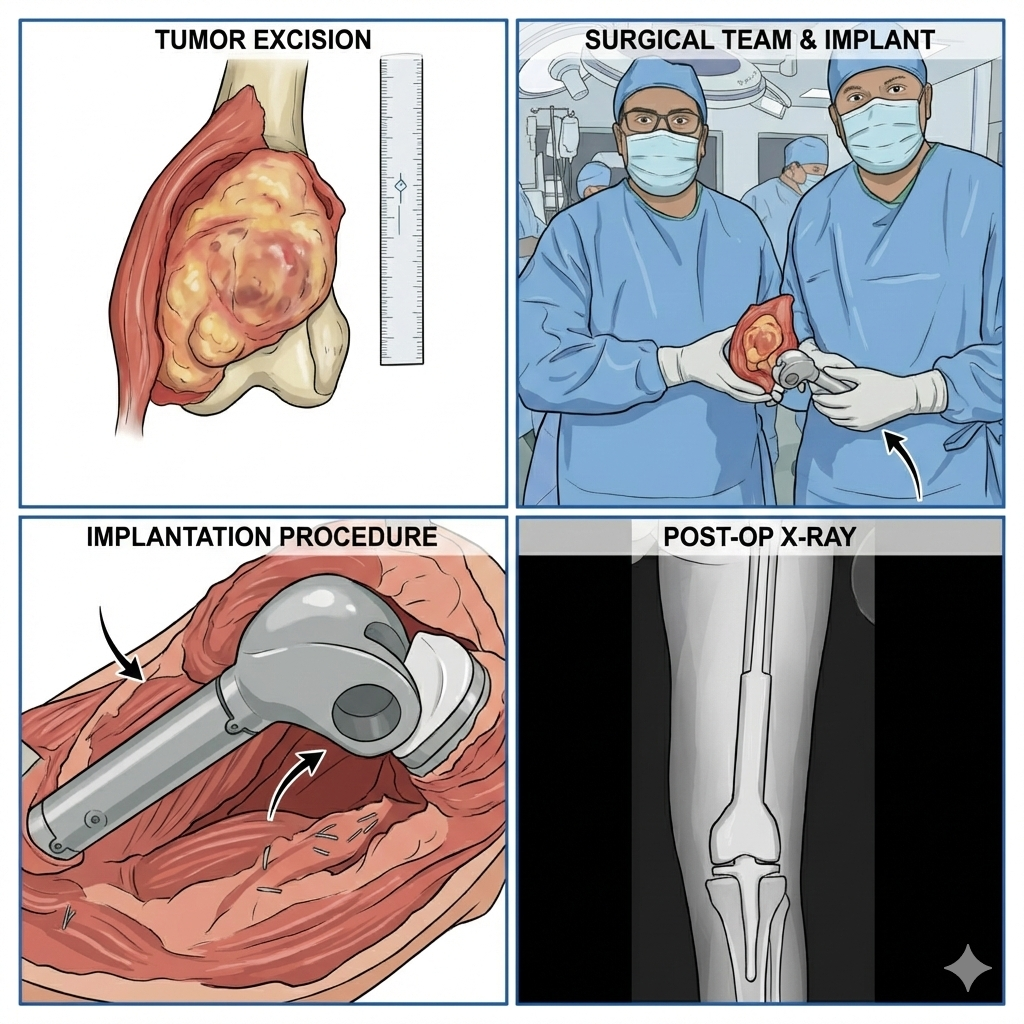
Limb salvage surgery with allografts and megaprostheses replaced many amputations.
Advances in chemotherapy and surgical techniques transformed care from radical sacrifice to limb preservation.
The orthopaedic oncology team
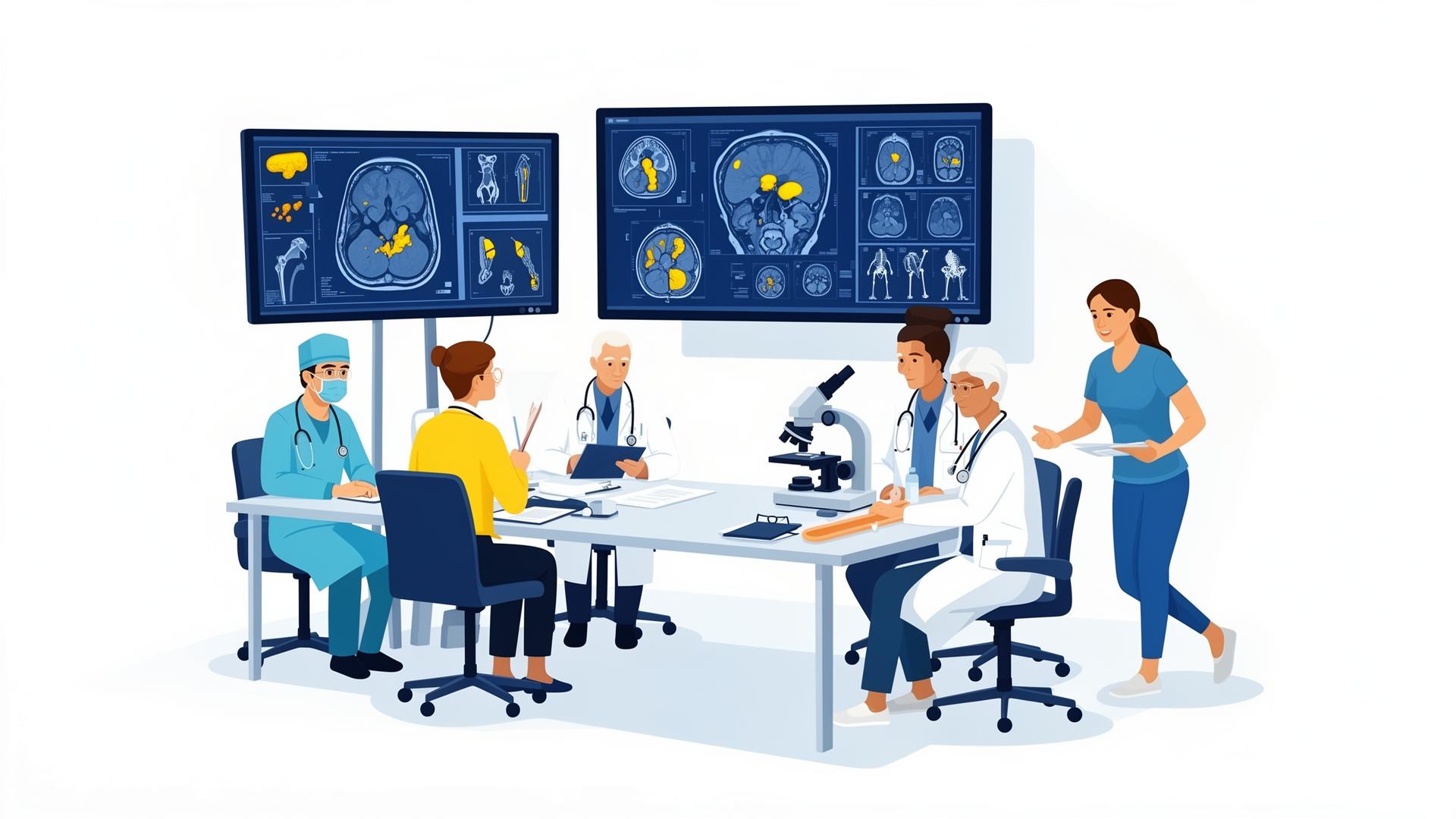
Expert care depends on the seamless coordination of multiple specialists — each playing a critical role in the patient's journey.
Leads diagnosis, surgical planning, tumour resections and reconstructions.
Designs neoadjuvant / adjuvant chemotherapy and targeted therapies.
Delivers precise radiotherapy (IMRT, SBRT, brachytherapy) for local control.
Provides detailed imaging (MRI, PET-CT) for staging and surgical mapping.
Confirms tumour subtype with histology, immunohistochemistry and molecular testing.
Guides postoperative recovery, physical therapy and prosthetic training.
Manages perioperative and chronic pain for improved quality of life.
Support patient education, psychosocial care and care coordination.
Personalised treatment plans
Tumour Board Review
Weekly multidisciplinary meetings tailor treatment based on tumour type, location, genetics and patient factors.
Precision Medicine
Molecular profiling (e.g. SS18–SSX, MDM2 amplification) informs the use of targeted agents and immunotherapy trials.
Patient-Centred Goals
Balancing oncologic control with functional outcomes and patient preferences.
Modern technological advances
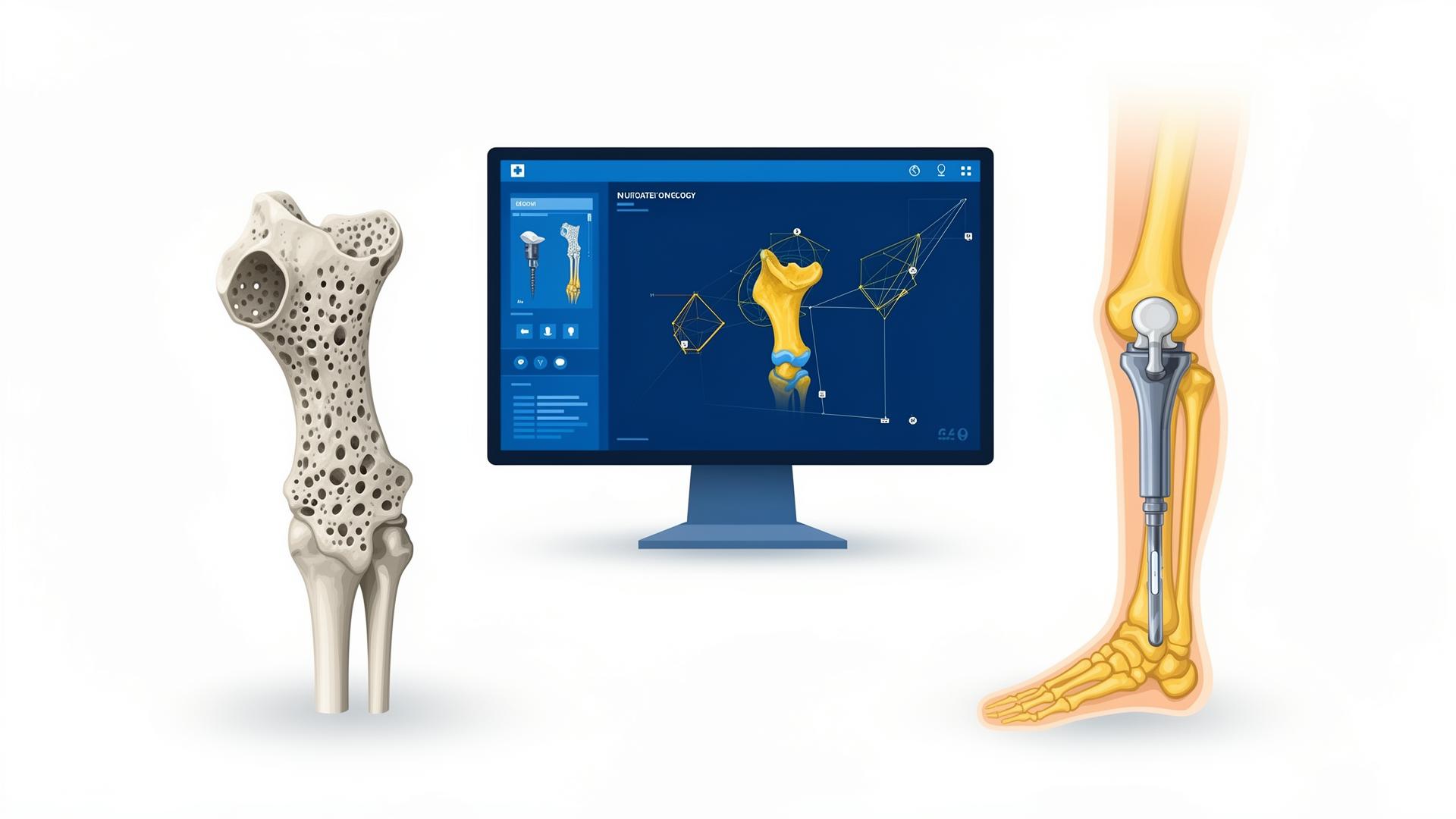
- ✓Surgical Navigation & Intraoperative Imaging
Real-time guidance ensures accurate resection margins and implant placement.
- ✓Custom 3D-Printed Implants
Patient-specific prostheses for complex reconstructions in pelvis and large bone defects.
- ✓Minimally Invasive Ablation
Radiofrequency or cryoablation for small metastases or palliative relief.
- ✓Enhanced Radiation Techniques
Proton therapy and SBRT deliver higher tumour doses with reduced normal-tissue toxicity.
- ✓Digital Pathology & AI
Automated image analysis accelerates diagnosis and risk stratification.
Case integration
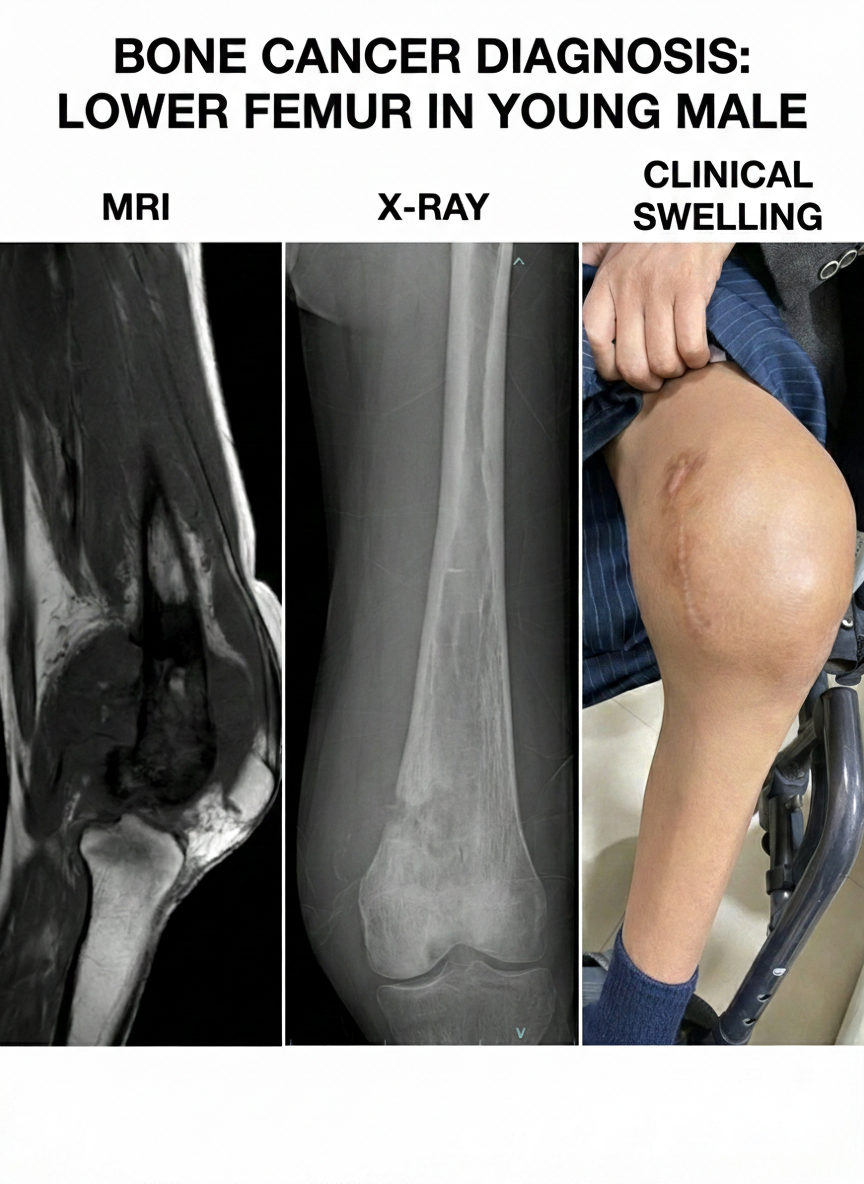
A 30-year-old runner with distal femur osteosarcoma underwent neoadjuvant chemotherapy, MRI-guided resection with computer-assisted navigation and implantation of a 3D-printed endoprosthesis. Postoperative targeted radiotherapy and rehabilitation enabled her to return to competitive sport — illustrating the synergy of personalised, technology-driven care.
Take-home summary
Orthopaedic oncologists and their multidisciplinary teams have revolutionised musculoskeletal tumour management by integrating personalised medicine, advanced imaging, limb salvage surgery and emerging technologies. This coordinated approach maximises survival, preserves function and enhances quality of life for patients with complex bone and soft-tissue tumours.